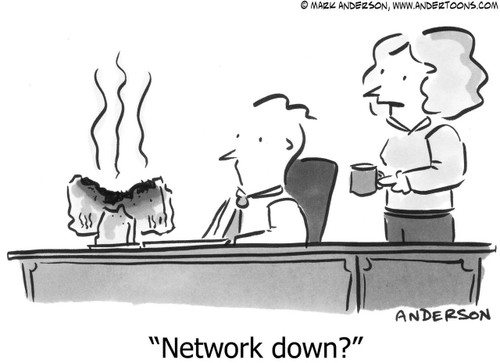
The best prevention for identity theft is poverty.
Tag: CyberSecurity
-
The 94% Bot Reality, Shift in AI landscape, & The Quantum Horizon
It’s a Paper Trail for the week ending in March 7, 2026, and we’ll cover what happened last week in the Information Security space.
Last Week, in Review
- Cloudflare’s 2026 Threat Report revealed that, in the last three months, bots now account for 94% of all login attempts on its network, and that 63% of all login attempts involved credentials compromised somewhere else – highlighting the need for multi-factor authentication and possibly adopting passwordless authentication mechanisms. [Cloudflare, Inc.]
- In preparation for quantum computers, Google Chrome team, in collaboration with Cloudflare and IETF’s PLANTS working group, is working on improvements to make HTTPS certificates secure for the quantum age, with initial performance and security discovery already underway and plans to finalize requirements to bring new certificate authorities to Chrome Quantum-resistant Root Store (CQRS) by Q3 of 2027. [Google Chrome, Cloudflare, Inc.]
- With the limited release of Anthropic’s Claude and OpenAI’s Codex Security demonstrating the ability to identify security vulnerabilities in codebases, both have reported multiple high-risk findings with claims of low noise ratios – potentially adding a new dimension to the landscape of code security scanning. [Anthropic PBC, OpenAI]
- Google announced that Chrome will move from a four-week to a two-week major release cycle starting with Chrome 153 on September 8, 2026. The change applies to desktop, Android, and iOS versions. Weekly security patches will continue between milestones while the Enterprise Extended Stable channel will remain on an eight-week cycle. [Chrome, 9to5google]
Pulse
Microsoft identified ongoing phishing campaign(s) that abuse OAuth’s legitimate redirect mechanism in popular identity providers, such as Entra Id and Google Workspace, that redirect users to adversary controlled websites – typically phishing frameworks, among others – that appear benign but ultimately lead to compromise of credentials and session cookies. Since this approach takes advantage of expected OAuth flows and not exploitation of existing vulnerabilities, it makes it harder for traditional URL-based phishing detection methods to protect against such attacks. [Microsoft]
Passaic County in New Jersey disclosed a malware attack that disrupted phone lines and government IT systems, affecting services for nearly 600,000 residents. The county is working with state and federal agencies on remediation. The attack underscores the threats that local government entities face, which often have limited cybersecurity resources. [The Record, N12N, LLC]
Fix-it Frank
Google’s March 2026 Android security update addresses over hundred vulnerabilities, including several critical-severity bugs. The update also includes patches for a Qualcomm zero-day (CVE-2026-21385), an actively targeted high-severity memory corruption vulnerability, privilege escalation in Framework and privilege escalation flaws in Kernel components. As mobile device fleets make up a substantial part of BYOD for the organization, March Android security patches to managed device fleets should be rolled out with urgency. [AOSP, The HackerNews]
The Fine Print
The NY Raise Act, signed in December 2025 and set to take effect from January 2027, establishes requirements for large developers of frontier AI models to publish safety and security practices publicly, publishing certain transparency reports, and notifying the government within 72 hours of the determination of a safety incident. [Davis Wright Tremaine LLP]
Wilson Sonsini’s 2026 Year In Preview reports that cyber insurance carriers are increasing conditioning coverage on AI-specific security controls, with some starting to introduce AI-specific security riders as a prerequisite for underwriting. [Wilson Sonsini Goodrich & Rosati]
CalPrivacy fined PlayOn Sports – a high school sports media platform – $1.1 million for failure to configure its digital assets to recognize and honor consumers’ requests to opt out of sale or sharing of personal information in violation of California Consumer Privacy Act (CCPA). It was further noted that use of phone or email opt-out when the company uses digital tracking technologies is insufficient to satisfy the opt-out obligation. [Holland & Knight LLP]
The Bottom Line
From the introduction of various Artificial Intelligence laws to the adoption of AI security practices in cyber insurance space, there appears to be a shift towards the need and desire for a transparent AI culture. Coupled with the roadmap for Quantum-Resistant Root Stores adoption also highlights that the infrastructure needed to support and survive such major changes is being built right now – introducing risk of being caught in the paper trail of a legacy era if not properly planned for.Thanks for tuning-in to this edition of Paper Trail. If you found this helpful, don’t forget to subscribe.
-
Cisco SD-WAN Bypass, ManoMano Breach & AI-Fueled Exploit Surge
It’s a Paper Trail for the week ending in Feb 28, 2026, and we’ll cover what happened last week in the Information Security space.
Last Week, in Review
- Critical authentication bypass vulnerability – CVE 2026-20127 – in Cisco SD-WAN, with exploitation dating back to 2023, allows an unauthenticated adversary to fully compromise controllers, obtain administrative privileges, and potentially manipulate network configuration. The vulnerability falls under the patch NOW category for organizations using Cisco SD-WAN products. [Cisco, The Hacker News]
- Microsoft, in its recent Cyber Pulse Report, identified that over 80% of Fortune 500 companies have active AI agents built using low-code or no-code tools. It further highlighted that only 47% of the organizations have applied security controls to their GenAI platforms, and 29% of employees use non-approved agents at work. [Microsoft, Microsoft]
- ManoMano – a European online marketplace – confirmed a data breach (allegedly) affecting approximately 38 million individuals (based on attacker claims and third-party reporting) across France, Germany, Italy, Spain, and the United Kingdom. The breach was a result of a compromise of a customer service subcontractor – underscoring the importance of active risk management and governance practices across third- and fourth-party partnerships. [SecurityWeek, TechRepublic, SecurityAffairs]
- VEIR identified that year-over-year tracked exploits rose by 16.5%, with a significant portion of the increase attributed to AI-generated proof-of-concept code, including nonfunctional or misleading exploit content. However, it was noted that only 1% of the reported vulnerabilities in 2025 were weaponized in the wild, with some driving outsized impact than others – highlighting the need to adopt risk-based remediation. [VulnCheck]
Pulse
Qrator Labs identified a C++ botnet loader for Windows operating system – Aeternum C2 – that uses smart contracts hosted on the Polygon blockchain to fetch instructions instead of the traditional approach of loading the information from hardcoded IP(s) and/or domain(s) of centralized command-and-control infrastructure, requiring a shift in how security operation teams think about prevention. [HackRead, Qrator Labs, Cyber Security News]
ReversingLabs discovered a malicious NuGet package – StripeApi[.]Net – impersonating Stripe’s official .NET library including the official package’s branding and readme, and was uploaded by a fake account on February 16. The package’s download count was artificially inflated to make it appear legitimate and instill developer trust in the package. [ReversingLabs, ReversingLabs, The Hacker News]
Orca Security disclosed a passive prompt injection vulnerability – RoguePilot – in GitHub Codespaces that could have allowed attackers to inject malicious Copilot instructions through GitHub issues, potentially leaking GITHUB_TOKEN credentials and enabling repository control. [SecurityWeek, Orca Security]
Fix-it Frank
Claude Code – a popular agentic coding platform by Anthropic – was found to allow adversaries to achieve remote code execution and steal API credentials through malicious project configurations when users clone and open untrusted repositories. Claude Code should be upgraded to v2.0.65+ or later to address GHSA-ph6w-f82w-28w6 – affecting versions prior to 1.0.87, CVE-2025-59536 (September 2025) – affecting versions prior to 1.0.111 (October 2025), and CVE-2026-21852 – affecting versions prior to 2.0.65 (January 2026). [Checkpoint, The Hacker News]
Broadcom released patches for a high-severity command injection security vulnerability – CVE-2026-22719 – affecting VMware Aria Operations. VMware Cloud Foundation and vSphere Foundation should be upgraded to version 9.0.2.0 or later, and Aria Operations to version 8.18.6 or later. [SecurityWeek]
Juniper Networks issued an out-of-band emergency patch for a remote code execution vulnerability – tracked as CVE-2026-21902 – in Junos OS Evolved for PTX series routers. It affects the anomaly detection framework and can grant an unauthenticated adversary with network access the ability to execute arbitrary code with root privileges. [SecurityWeek, Juniper Networks]
The Fine Print
The Marquis Software Solutions v. SonicWall lawsuit, alleges gross negligence and misrepresentation that led to a ransomware attack disrupting operations at 74 U.S. financial institutions. This could set an important precedent for security vendor accountability and may reshape vendor contract requirements, especially in regulated industries like financial services and healthcare. [Bleeping Computer, CyberPress, PacerMonitor]
The EU Cyber Resilience Act (CRA) – a regulation setting mandatory cyber security requirements for hardware and software makers that are placing a product on the European market – vulnerability reporting requirements take effect on September 11, 2026 with all obligations going into full effect by December 11, 2027. [ORC, VinciWorks, EU Commission]
State-specific comprehensive consumer privacy statutes expand to cover 20 states in the USA – with Kentucky, Rhode Island, and Indiana newly joining the list as of January 1, 2026 – while the Federal Trade Commission (FTC) issued a COPPA enforcement policy statement to incentivize responsible age-verification practices and signaled a COPPA Rule review regarding age verification mechanisms. [White & Case, Multistate]
The Bottom Line
The widening gap between AI adoption and AI governance, the shift toward blockchain-based C2 infrastructure, and supply chain attacks targeting both vendor partnerships and developer ecosystems all point to an attack surface expanding faster than most organizations can govern it. Meanwhile, shifting legal and regulatory landscape signal that the legal and regulatory consequences of falling behind may have tangible impact on the organizations.
Thanks for tuning-in to this edition of Paper Trail. If you found this helpful, don’t forget to subscribe.
-

Sorry, buddy! Your Name Din’t Meet Our (in)Security Requirements!
For future security questions, the name of your first pet should include a minimum of eight uppercase and lowercase letters, numbers and special characters.
-
WEF 2026 Cybersecurity Outlook, VoidLink, BeyondTrust RCE, and Microsoft zero-days
It’s a Paper Trail for the week ending in Feb 14, 2026 and we’ll cover what happened last week in the Information Security space.
Last Week, in Review
- Microsoft, in its latest February Patch Tuesday release, patched 59 CVEs – including actively exploited 6 zero-days.
- According to the BlackFog 2025 Report, while a 49% YoY increase in reported ransomware attacks was observed, 86% of the ransomware attacks go unreported.
- As indicated in the World Economic Forum’s 2026 Global Cybersecurity Outlook, CEOs’ top cyber risk concerns include cyber-enabled fraud and phishing, AI vulnerabilities, and exploitation of software vulnerabilities – differing from CISOs’ top concerns: ransomware attacks, supply chain disruption, and exploitation of software vulnerabilities.
Pulse
VoidLink – a Cloud-first Malware Framework: VoidLink – an advanced malware framework built to gain longer-term Linux access persistence across multiple cloud providers (Amazon AWS, Google GCP, Microsoft Azure, Alibaba Cloud, Tencent Cloud) to steal credentials, escapes containers, and hides at the kernel level using encrypted traffic that mimics normal web activity. Some mitigations include deploying an EDR for Linux platforms, hardening container and K8s environments, monitoring usage of metadata endpoints, and strong network segmentation. [The Hacker News (Jan 21, 2026); Cisco Talos (Feb 10, 2026); Darkreading (Jan 21, 2026); Checkpoint (Jan 13, 2026)]
Blockchain-native financial services and lending platform – Figure – affected by phishing: Figure recently disclosed a breach after an employee became a victim of social engineering, which allowed the threat actors access to limited amounts of data. [TechCrunch (Feb 13); Security Affairs (Feb 14, 2026)]
Fix-it Frank
Microsoft releases patches for 59 CVEs, including 6 zero-days: Microsoft released patches for 59 CVEs on Feb 10, including 6 zero-days already being exploited in the wild. Key zero-days include CVE-2026-21510 (Windows Shell), CVE-2026-21513 (Windows), and CVE-2026-21514 (Word security feature bypass). With targeting of flaws for GitHub Copilot, Visual Studio Code, and Azure SDK adds one more instance of a shift in the software supply chain farther left and into the IDE. [CybersecurityNews (Feb 10, 2026); CrowdStrike (Feb 10, 2026)]
Solarwinds web helpdesk under active multi-stage attacks: Microsoft and Huntress both reported active exploitation of SolarWinds Web Help Desk (WHD) instances across multiple customer environments. Attackers used critical RCE flaws (CVE-2025-40551, CVSS 9.8) to gain initial access, then deployed Zoho ManageEngine and Velociraptor for persistence, used living-off-the-land techniques, and set up reverse SSH shells. In an attack like this, attackers used legitimate admin tools to stay hidden, making detection extremely difficult with traditional security controls. SolarWinds WHD should be updated to version 2026.1 or later to remediate the identified vulnerability. As an additional measure, the organization should perform targeted threat hunts to identify unauthorized RMM tools. [The Hacker News (Feb 9, 2026); Huntress (Feb 8, 2026); Microsoft Defender Research (Feb 6, 2026)]
BeyondTrust RCE exploited without hours of PoC release: Attackers began exploiting a critical RCE vulnerability in BeyondTrust Remote Support and Privileged Remote Access within hours of a proof-of-concept being published, demonstrating that the time from PoC to exploitation is shrinking to hours, not days. It is recommended to patch BeyondTrust Remote Support and Privileged Remote Access tooling to the latest version and limit its access from the Internet in the event patches cannot be applied. [The Hacker News (Feb 9, 2026)]
287 Malicious Chrome extensions stole data from 37.4 million users: Security researcher Q Continuum discovered 287 Chrome extensions secretly transmitting browsing data to remote servers and data brokers. The extensions have 37.4 million combined installations – roughly 1% of Chrome’s global user base. Separately, an “AiFrame” campaign of 32 extensions marketed as AI assistants was found exfiltrating data. Another extension, “CL Suite,” targeted Meta Business Suite credentials and TOTP codes. Organizations should review existing extensions and implement extension allowlist to limit the potential risk posed by unvetted browser extensions. [SecurityWeek (Feb 14, 2026); The Hacker News (Feb 13, 2026); The Register (Feb 11, 2026); Socket (Feb 13, 2026)]
The Fine Print
Conduent breach affects 25M+ people; Texas AG launches investigation: Conduent, a business technology firm offering services for various government programs, experienced a ransomware attack in January 2025 and the exposed data includes SSN, medical records, and insurance details. This has affected more than 25M people across the United States – making it the 8th largest healthcare data breach in the country’s history. In addition to an investigation from Texas AG, the company also faces 8 class action lawsuits in New Jersey. [TechCrunch (Feb 5, 2026); Fox Business (Feb 9, 2026); Texas AG Press Release (Feb 12, 2026); SecurityWeek (Feb 11, 2026); HIPAA Journal (Feb 13, 2026)]
India introduces framework to regulate AI-generated content with new deepfake rules: India enacts a regulation G.S.R 120(E), effective Feb 20, 2026, that formally defines Synthetically Generated Information (SGI), the labeling requirements, and mandatory requirements for disclosure for AI-generated content – including deepfakes. This makes it one of the early national frameworks providing governing requirements around SGI. [The Policy Edge (Feb 11, 2026); MEITy, India]
The Bottom Line
Threat activity is trending toward faster exploitation from zero-days to rapid PoCs to weaponization and stealthier access. At the same time, phishing-driven breaches and emerging deepfake regulation signal a growing convergence of operational security risk and governance pressure.